Mutant Gang Uprising
Batman the Dark Knight Returns 10th Anniversary Edition HardcoverThe Mutant Gang Uprising is the decisive urban crisis that transforms Gotham City’s social decay from a background condition into an immediate political and moral emergency. The Mutant Gang’s organized violence reveals that official institutions can no longer protect the city, while Bruce Wayne / Batman’s response turns the uprising into the first test of whether a retired symbol can still mobilize resistance and restore public order.
Causes and Background
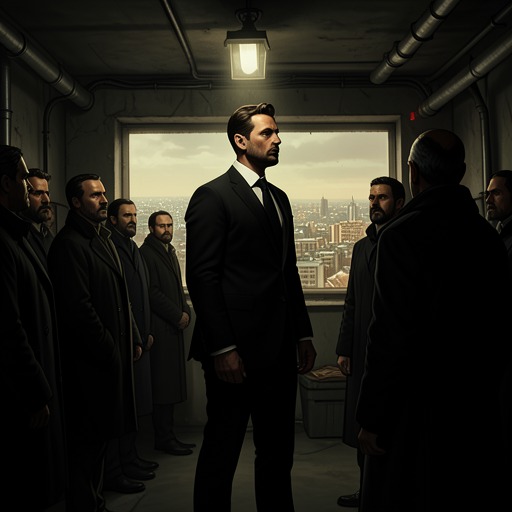
The uprising grows out of a Gotham City already marked by fear, disorder, and weakened authority. The Mutant Gang is not presented as an isolated collection of criminals but as a collective force capable of threatening the city’s streets and challenging the power of the Gotham City Police Department. Its violence therefore has consequences beyond individual attacks: it creates the impression that the city has lost control of its own public space.
The crisis also develops within a wider atmosphere of mediated alarm. Television reporting and public commentary frame violence as evidence of a city in decline, magnifying the sense that ordinary law enforcement is inadequate. The Mutant Gang becomes a visible label for that danger, while Bruce Wayne / Batman becomes a competing label for the kind of force that might oppose it. The conflict is consequently fought not only through physical power but through public interpretation: the gang embodies predatory disorder, whereas Batman’s return seeks to make fear serve a different purpose.
Participants and Stakes
The Mutant Gang’s strength lies in numbers, cohesion, and the fear generated by its reputation. Its challenge is directed at the whole civic structure of Gotham City rather than at a single rival. The Gotham City Police Department remains the formal authority, but the uprising demonstrates the limits of authority that lacks sufficient control of the streets. The failure is not merely tactical; it weakens public confidence and leaves room for an unofficial power to claim legitimacy through action.
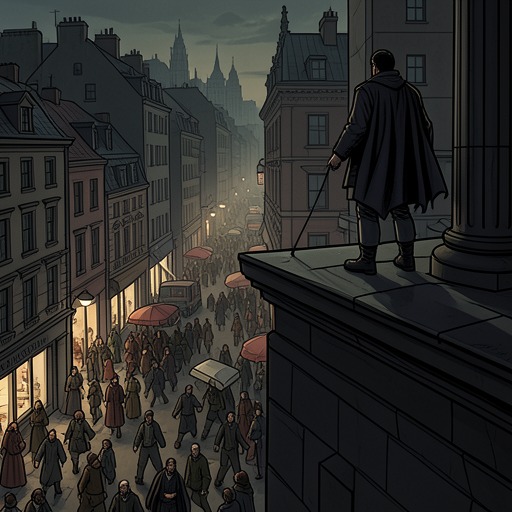
Bruce Wayne / Batman enters the crisis as a retired figure whose age and absence make his intervention uncertain. His decision to act places his body, identity, and principles at stake. He is not simply attempting to defeat gang members. He is testing whether the Batman persona can still function as a public instrument after years of retirement, and whether the city will respond to the symbol as something more than a memory.
Course of the Uprising
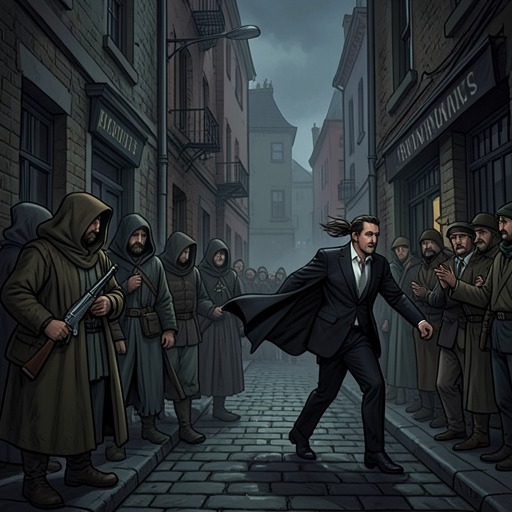
The Mutant Gang Uprising escalates through confrontations that make the gang’s collective presence impossible to ignore. The violence is sufficiently extensive to threaten Gotham City’s normal civic life, and the Mutant Gang’s organization allows it to appear more powerful than the fragmented institutions opposing it. The uprising thus creates a vacuum in which the strongest visible actor may determine what “order” means.
Batman’s intervention changes the terms of that struggle. Rather than allowing the gang’s numerical superiority to define the encounter, he confronts its power directly and makes the conflict legible as a contest between disciplined resistance and uncontrolled predation. His actions help separate the gang’s claim to dominance from the broader population’s need for safety. In doing so, he begins the process that later enables him to organize Gotham City’s residents and other allies against the continuing breakdown of civic order.
The Mutant Leader becomes the clearest personification of the uprising’s authority. The confrontation between Bruce Wayne / Batman and the Mutant Leader concentrates the larger crisis into a physical contest: the gang’s leader represents strength based on intimidation and collective force, while Batman relies on experience, preparation, and the authority of a symbol that the gang cannot fully absorb. Batman’s struggle with him is therefore both a battle and a public demonstration that the gang can be resisted.
Consequences and Aftermath
The uprising alters Gotham City’s balance of power. The Mutant Gang’s rule of Gotham City is exposed as a form of domination rather than a stable social order, but the institutions that should replace it remain damaged. Batman’s victory does not instantly repair the city or erase the conditions that allowed the gang to rise. Instead, it creates a temporary opening in which new forms of collective action become possible.
That opening is crucial because Batman’s return does not remain a solitary act. The crisis helps draw Carrie Kelley / Robin into Batman’s orbit and contributes to the formation of a wider network of people willing to act when official structures fail. Later, the emergence of the Sons of Batman shows how the uprising’s logic persists after the original gang’s challenge: collective organization can oppose disorder, but it can also reproduce coercive patterns when discipline is replaced by personal allegiance and force.
The uprising also changes the meaning of Batman’s retirement. Before the crisis, retirement appears to have left Gotham City without the figure that once gave its fear a recognizable direction. After the uprising, Batman’s return becomes a political fact as well as a personal awakening. His presence restores a measure of confidence, yet it also raises the unresolved question of whether order established through an unauthorized individual can remain accountable to the public.
Narrative Significance
The Mutant Gang Uprising supplies the first major proof that the old Gotham City order is unsustainable. It connects private trauma, public fear, media framing, police weakness, and collective mobilization within one escalating conflict. The gang’s violence makes Batman’s return appear necessary, but the resulting success does not validate a simple restoration of the past. It begins a transition in which the city’s citizens, Batman, and later the Sons of Batman all compete to inherit the power released by institutional collapse.
As a recurring reference point, the uprising also shadows later conflicts. It establishes the pattern by which a visible threat produces emergency action, emergency action creates new loyalties, and those loyalties can become a new source of instability. The Mutant Gang is defeated as an immediate force, but the political problem it exposes remains: Gotham City needs protection, yet the means of protection may themselves challenge law, legitimacy, and democratic control.